
Acrylic Aquarium Windows for Public Aquariums and Zoos
Hydrosight plans, processes and installs acrylic windows for public aquariums, zoos and dolphinariums: from single windows to panoramic panels, curved windows and walk-through tunnels. We calculate every window for its tank, source the cast acrylic from specialized manufacturers, process it at our factory in Emmerich am Rhein, Germany, where needed, and seal it into the tank with our own installation team.
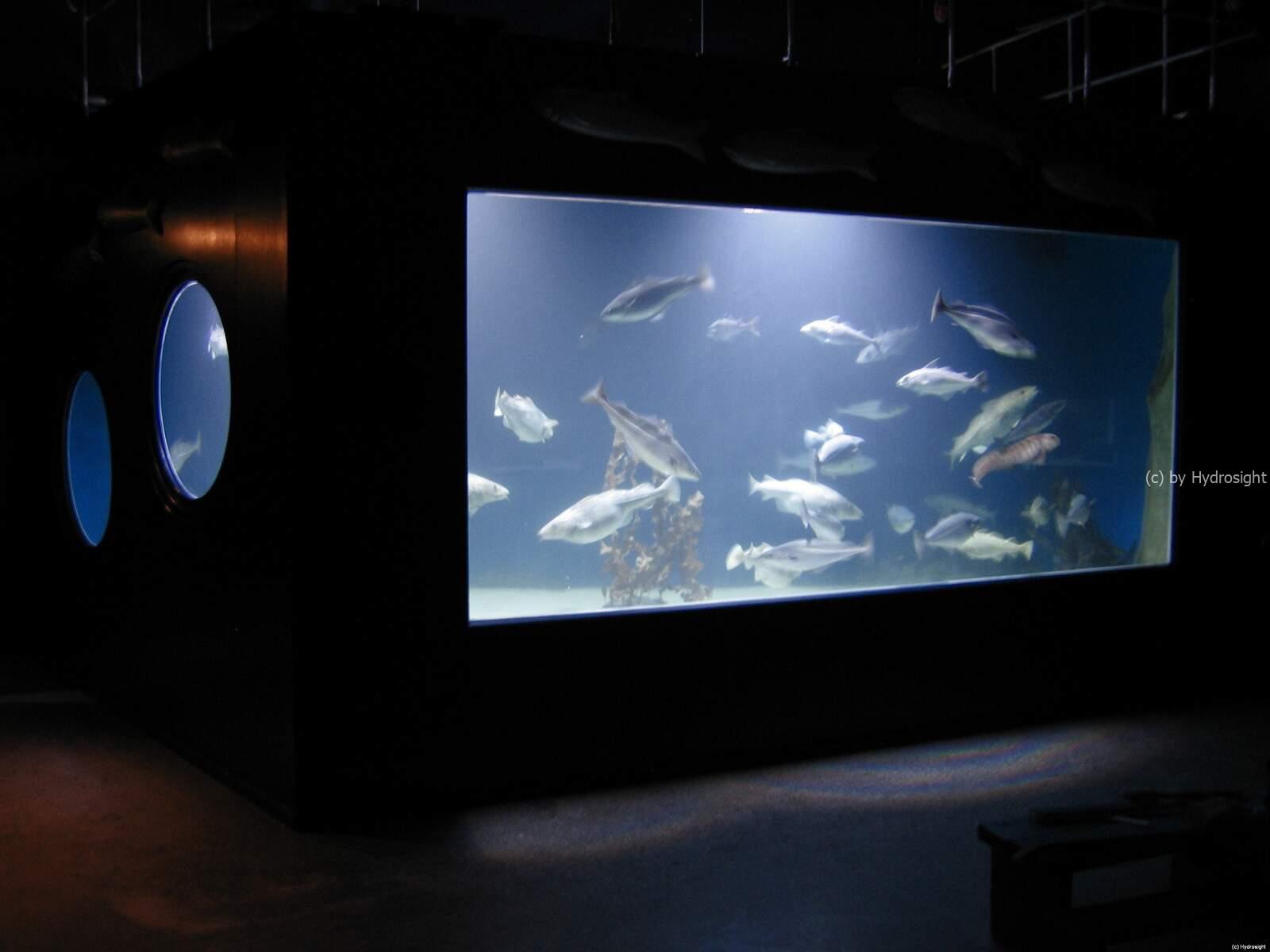
Aquarium Panels, Panoramic Windows and Tunnels
Public aquariums need large, clear panels that carry the full water depth of the tank, and zoos need underwater windows in animal enclosures, for example for otters, seals or big cats. Acrylic (PMMA) is the material of choice: it stays very clear even in great thicknesses, weighs less than half as much as glass and deforms under overload instead of breaking suddenly.
- Size: cast panels up to 11 × 3 m (36 × 10 ft) in one piece; larger panoramic windows are made of several panels bonded together with nearly invisible joints.
- Shapes: flat panels, curved panels, cylinders and walk-through tunnels, thermoformed to the shape of the exhibit.
- Thickness: calculated for each panel from its size, the water depth and the support conditions, typically 30 to 200 mm.
- Water: for seawater and fresh water; versions for brine on request.
- View: planned for the visitor: distortion-free, without the green tint of thick glass, with viewing angles and reflections taken into account.









Hydrosight Projects related to this Topic: Aquariums
All projects →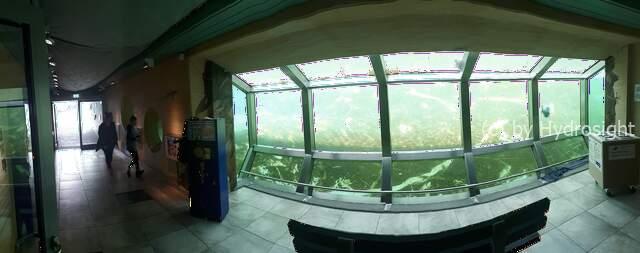
Glass Viewing Bay for the Seal Station Friedrichskoog
Glass bay and round underwater windows of laminated safety glass for the seawater seal pool at the Seal Station Friedrichskoog, Germany,…
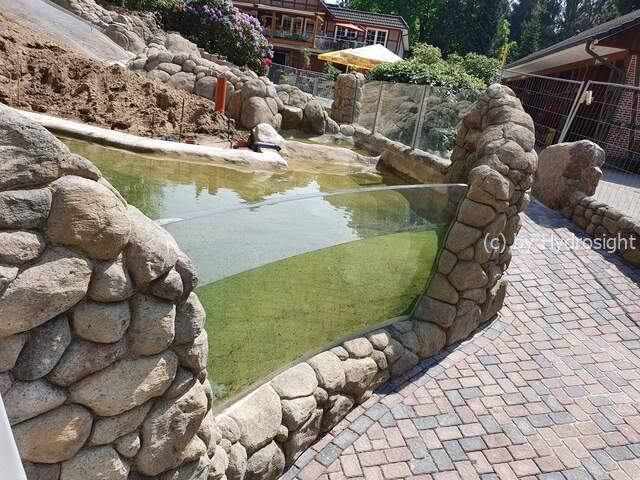
Wildpark Schwarze Berge
Wildpark Schwarze Berge is a wildlife park near Hamburg. For its otter pool, Hydrosight supplied an elegantly curved acrylic glass wall…
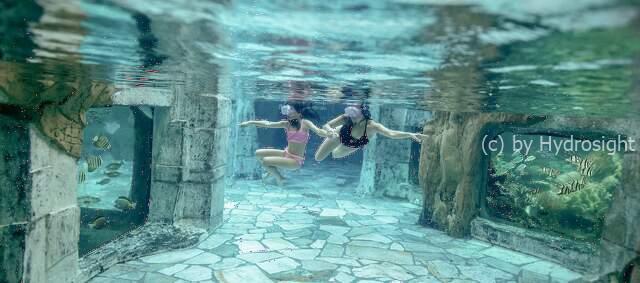
Snorkel Pool Windows in Center Parcs, Allgäu
11 acrylic windows between a snorkel pool and a freshwater aquarium at Center Parcs Park Allgäu, Germany, with counter flanges for water on …
Installation in the Concrete Tank
Aquarium panels are usually frameless: the acrylic panel is sealed directly into a rebate in the concrete wall or floor of the tank. This is done by our own installation team, which works on construction sites around the world all year round. For smaller tanks and pools, framed underwater windows that any builder can install are an alternative.
- Design: structural calculation of every panel and drawings for the rebate in the concrete.
- Material and processing: cast acrylic from specialized manufacturers; where needed, cutting, bonding, thermoforming and polishing at our factory.
- Delivery: worldwide, packed for installation by crane.
- Installation: setting and sealing the panels in the tank by our own team.
Project: for Dolphina, a dolphinarium in Sharm el-Sheikh, Egypt, our team installed six aquarium windows of up to 3 × 1.8 m.
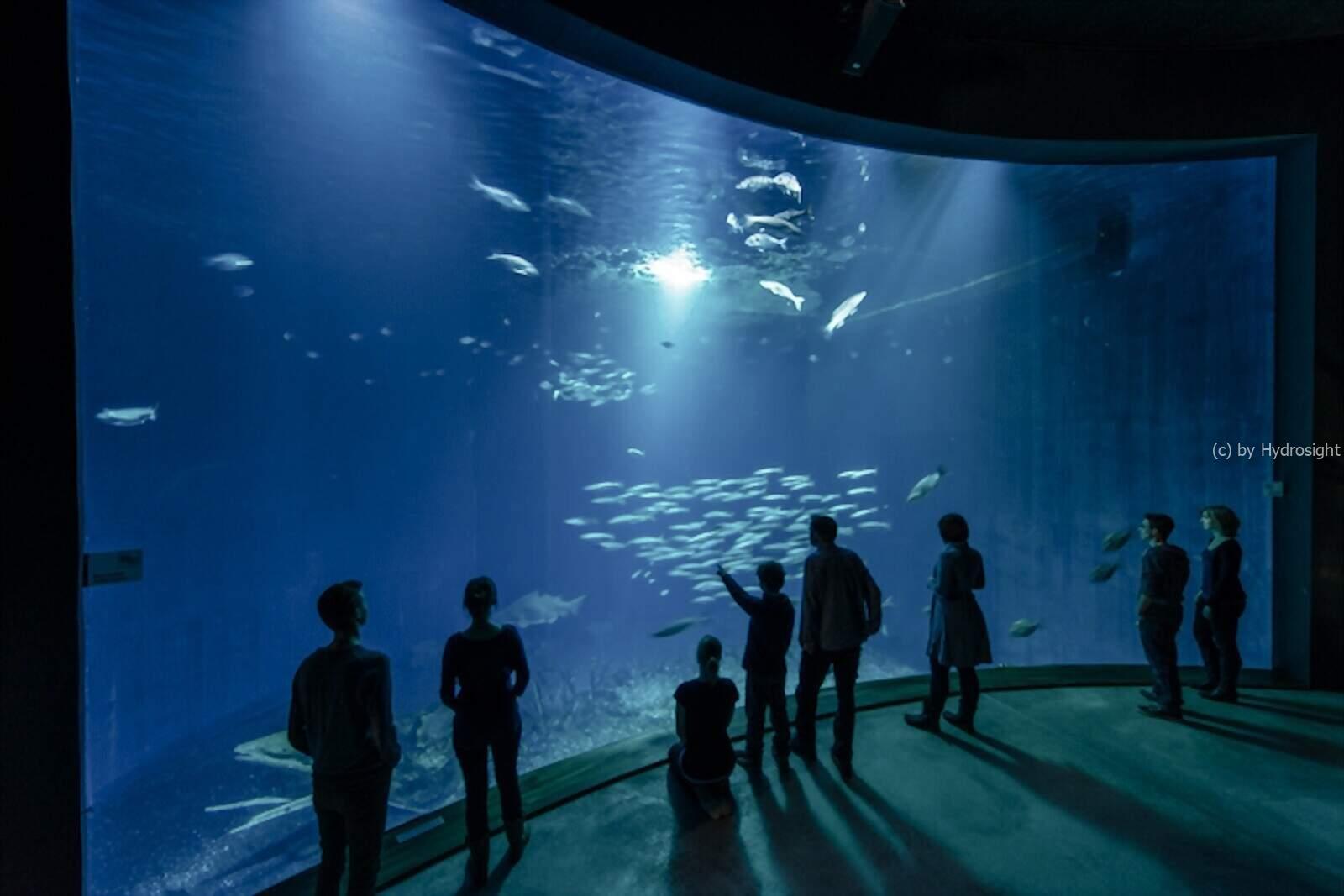
Curved acrylic window of the shoal tank at the Ozeaneum in Stralsund, Germany.
Maintenance, Repair and Replacement of Aquarium Panels
Cleaning, animals and visitors leave scratches that dull the view over the years. Our team polishes acrylic panels on site, repairs damage and reseals panels, including panels from other manufacturers. Light scratches can be polished out; for deeper damage we assess the panel and propose a repair. Old panels that are crazed, leaking or no longer clear can be replaced: we remove the old panel and seal a new one into the existing rebate.
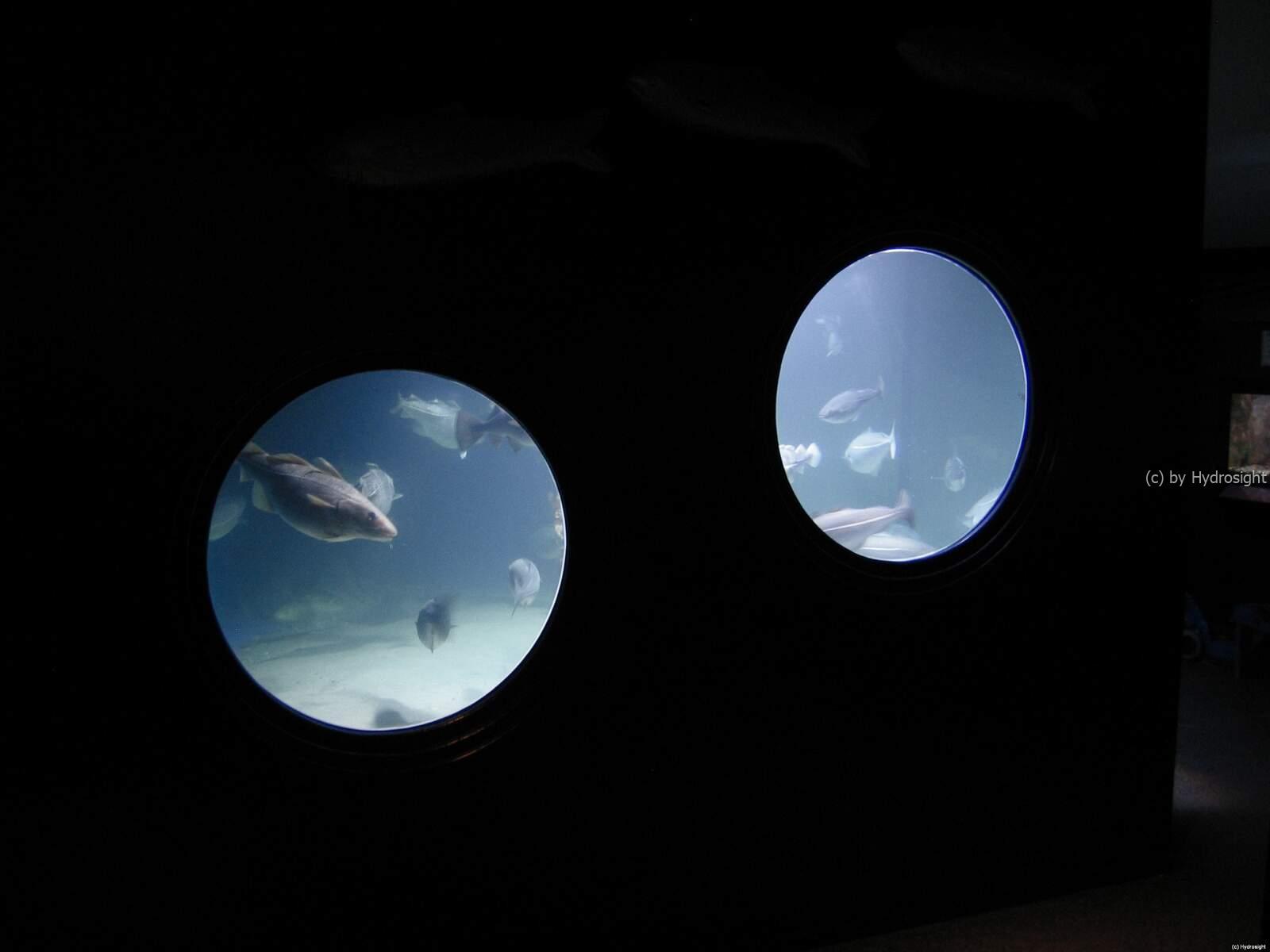
Round acrylic aquarium windows at the Lofoten Aquarium, Norway.
Frequently Asked Questions
Your question is not answered here? Send it to us and we will be glad to answer it.
Ask Your QuestionCan you make curved panels, panoramic windows or tunnels?
Yes. Single acrylic panels are made up to 11 × 3 m (36 × 10 ft) in one piece. Larger panoramic windows, for example for public aquariums, are made of several panels bonded together with nearly invisible joints. Acrylic can also be thermoformed into curved panels, cylinders and walk-through tunnels.
Is the window resistant to chlorine and salt water?
Yes. The complete system – acrylic, stainless steel frame (1.4571 / AISI 316Ti) and seals – is resistant to free chlorine up to 0.6 mg/l (standard according to DIN 19643) and to shock chlorination up to 100 mg/l for a maximum of 2.5 hours. The standard version is seawater resistant (salinity about 3.5 %). Versions for brine and for drinking water according to the KTW guideline of the German Environment Agency (UBA) and DVGW W 270 are available on request.
How large and how deep can an underwater window be?
Up to 11 × 3 m (36 × 10 ft). Size and depth depend on each other: large panels are made for the water depth of a normal pool, while small windows can be designed for 20 m of water column or more. Every window is calculated for its own size and depth.
How thick is the acrylic of an underwater window?
There is no standard thickness. It is calculated for each window from its size and the water depth, typically between 30 and 200 mm.
Can condensation form on the room side of the window?
Rarely. Acrylic insulates much better than glass (thermal conductivity 0.19 W/(m·K)), so the surface on the room side stays close to the room temperature. Condensation can still form when humid room air meets a window surface below the dew point, for example when cold pool water borders a warm, humid room. Good ventilation or dehumidification of the room prevents it.
Is there a warranty?
Yes, a 5-year manufacturer's warranty in addition to the statutory warranty. See the warranty terms.