
Underwater Portholes: Round Windows for Pools and Ponds
Hydrosight manufactures round underwater windows, also called portholes, for swimming pools, ponds, aquariums, dive tanks and industrial tanks. They are made to order in diameters from 20 cm to 300 cm and delivered ready to install in a stainless steel frame. This page shows architects, pool builders and private owners where round windows make sense, how they are installed and what they cost.

Why a Porthole?
A round window has no corners. The water pressure is carried evenly around the edge, and there are no corner points where stresses concentrate. The frame and the seal are also loaded evenly along the whole circumference. This is why so many ship windows are round.
The second reason is the look. A porthole frames a single view and takes up little of the wall, so the room behind it stays closed and the window itself becomes a feature. Several portholes in a row also work well.
If you want a wide, open view into the water, a rectangular underwater window or a glass wall is the better choice.
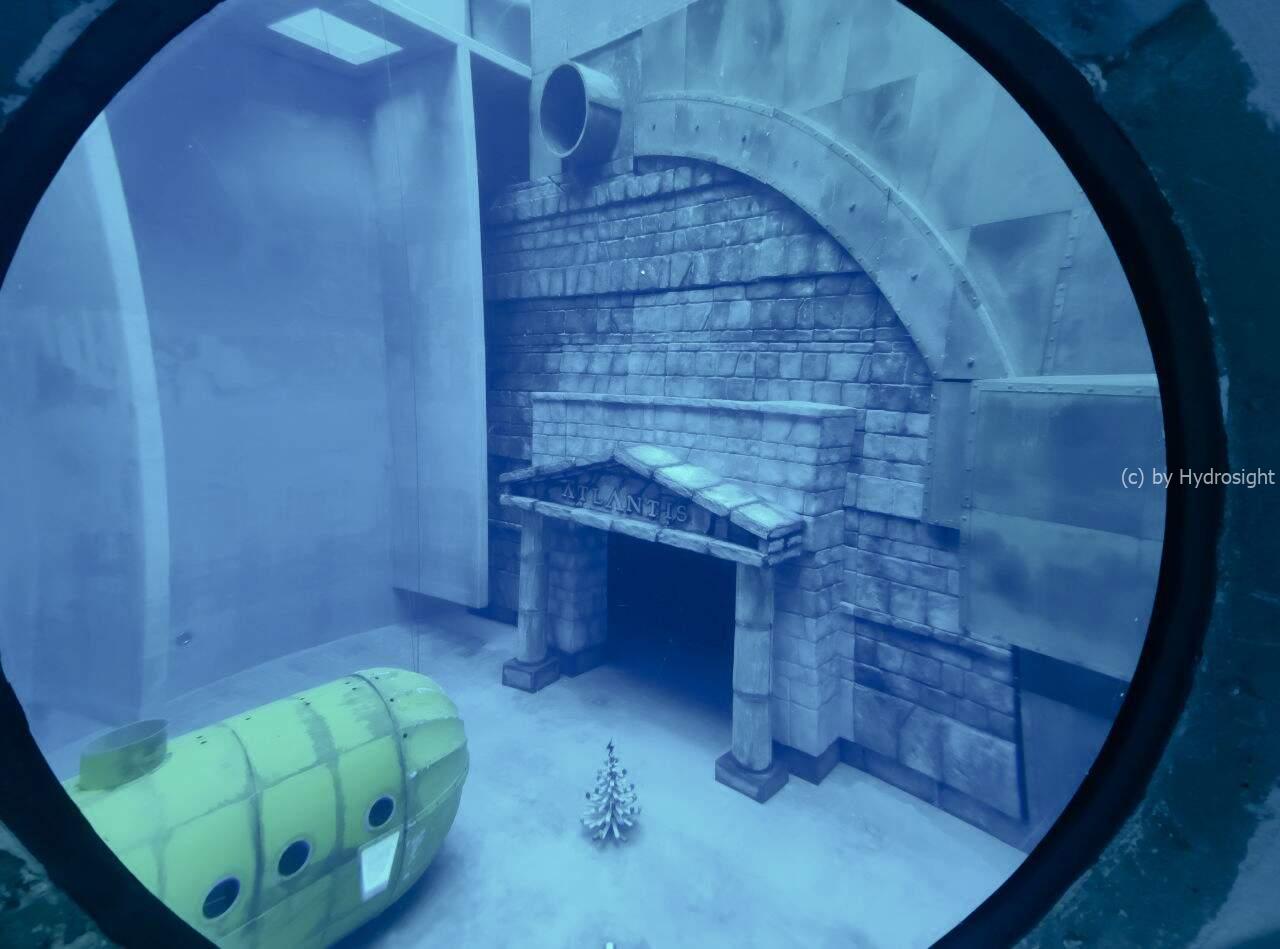
View through a round window into an indoor dive tank.
Pools, Ponds and Tanks
- Private pools: A porthole connects the pool with the room behind it. It brings daylight into a basement or garage and gives a view of the swimmers, as in this pool in Austria with three portholes.
- Public pools and swimming schools: Instructors can watch swimming and diving lessons from outside the water.
- Dive tanks: Instructors and visitors can follow the dive from a dry room. The windows of this indoor dive tank sit at a depth of 11 m.
- Ponds and swimming ponds: The pond liner is clamped to the window with pressure flanges, so round windows also suit koi ponds and existing liners. Examples are this swimming pond in Germany and the Hortus Botanicus in Amsterdam, with thanks to Rob Slagt of Garden Fix.
- Aquariums: The Lofoten Aquarium in Norway has two round windows, each 1 m in diameter.
- Industry and research: Portholes are used for inspection and for visitors in tanks and water treatment plants. More under Technical Applications.
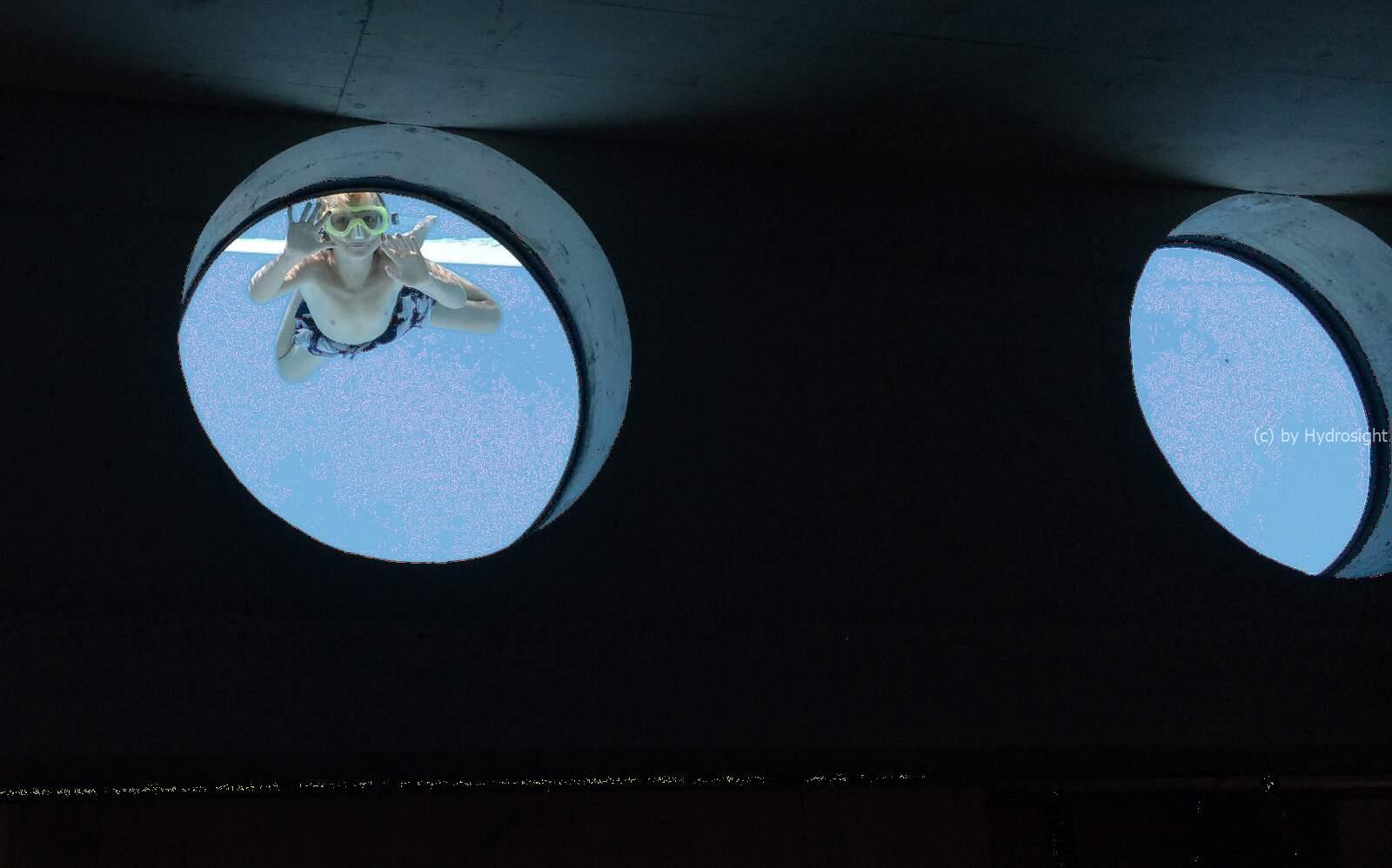
Portholes between a private pool and the room behind it.

View from the pool house into a swimming pond.
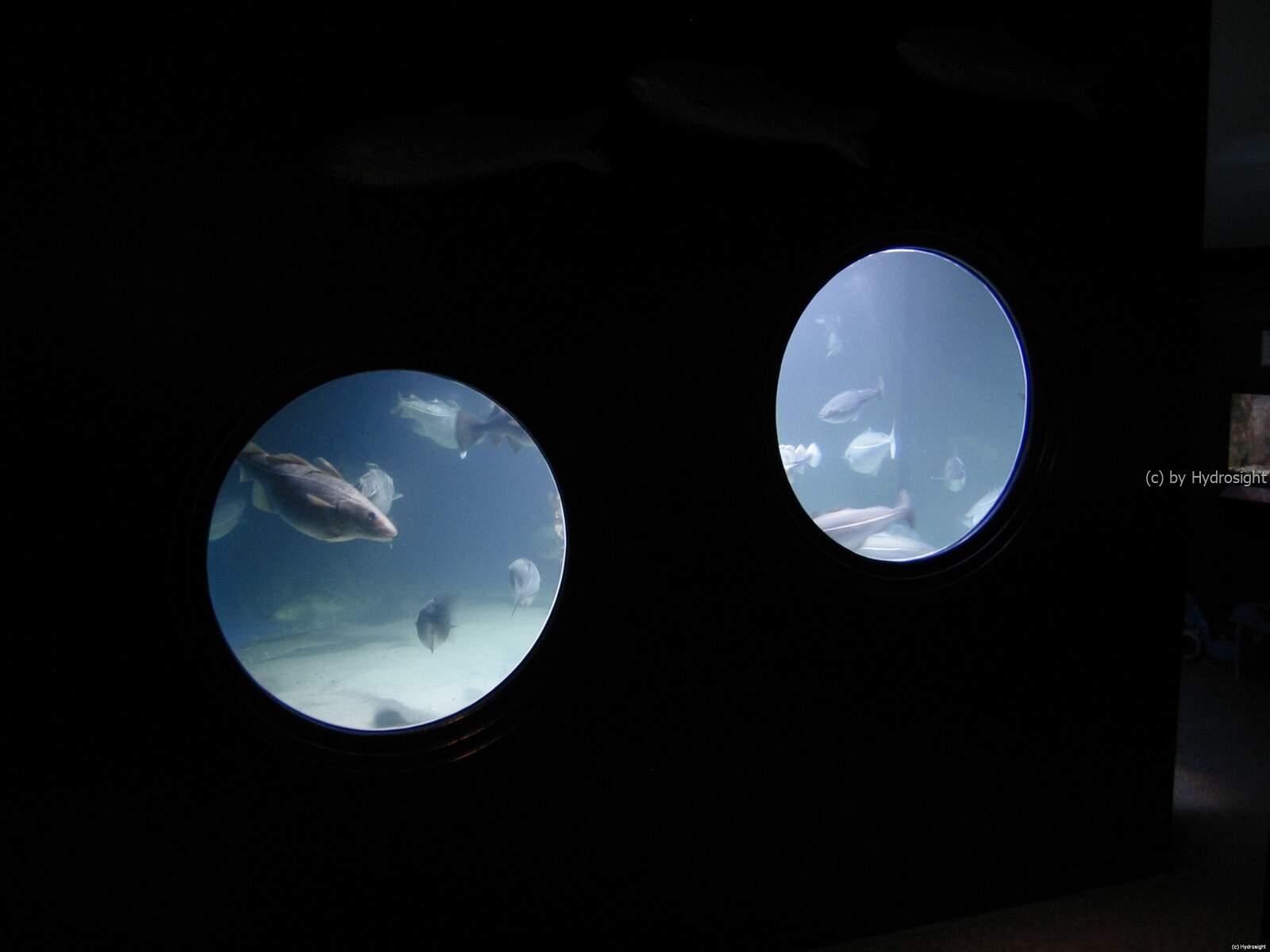
Round windows in a public aquarium.
Hydrosight Projects related to this Topic: Round
All projects →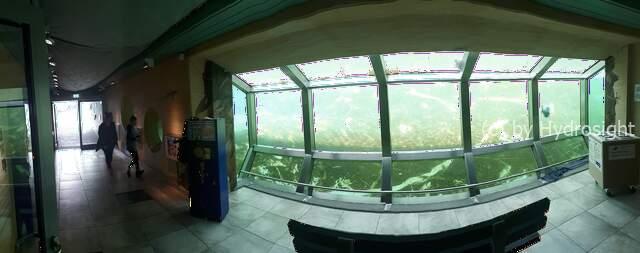
Glass Viewing Bay for the Seal Station Friedrichskoog
Glass bay and round underwater windows of laminated safety glass for the seawater seal pool at the Seal Station Friedrichskoog, Germany,…
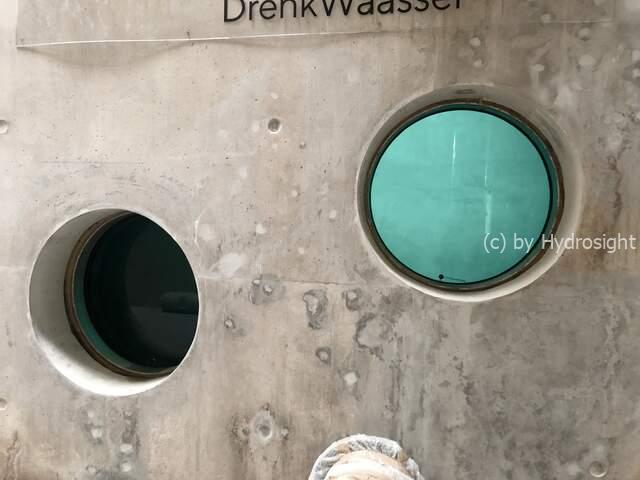
Luxembourg Drinking Water Tank
These windows were custom-built for SEBES, the national water company of Luxembourg. The client installed them in a water treatment plant…
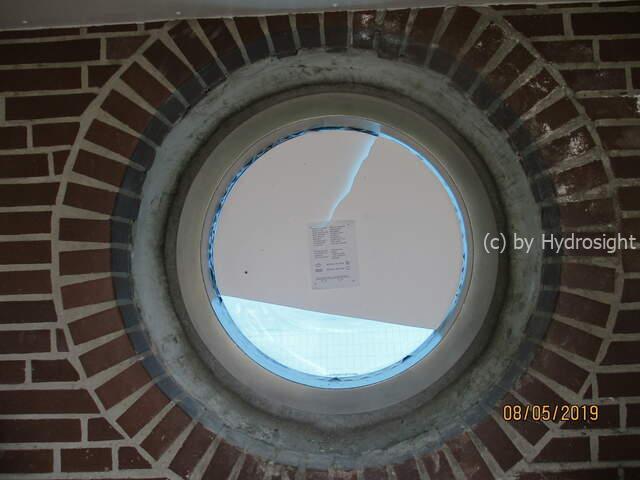
Beckum
These portholes are retrofits for the outdoor pool in Beckum, Germany
Sizes and Water Depth
Round windows are made to order. The thickness of the panel is calculated for each project from the diameter and the water depth.
| Property | Value |
|---|---|
| Diameter | 20 cm to 300 cm (8 in to 10 ft) |
| Water column | Standard design up to 20 m, depending on the diameter. Large diameters at great depth on request. |
| Glazing | Cast acrylic (PMMA GS) |
| Frame | Stainless steel 1.4571 / AISI 316Ti |
| Testing | Every window is pressure and leak tested at the factory |
Further values and tender texts are in the technical specifications.

Diver at round windows in a dive tank. Photo: Peter Ryngaert
Frame and Installation
Every window arrives as a ready-to-install unit. The acrylic panel is bonded and sealed into the stainless steel frame at the factory, so no glazing or sealing work is needed on site. The frame connects to the pool, and its design depends on the pool type:
- Tiled and concrete pools: adhesive flange
- Liner and plastic pools (PVC/PP): loose and fixed flange that clamps the liner
- Stainless steel pools: welding flange
- Exposed concrete pools: water stop plate that is cast in
In a new build, the opening is planned with the shell, so the concrete builder needs the dimensions early. Round windows can also be retrofitted in existing pools and ponds if the outside of the wall is accessible: the pool stands above ground, or a room such as a basement or garage is directly adjacent to the wall. If required, Hydrosight can also install the window.
More on windows for each pool type and on installation.
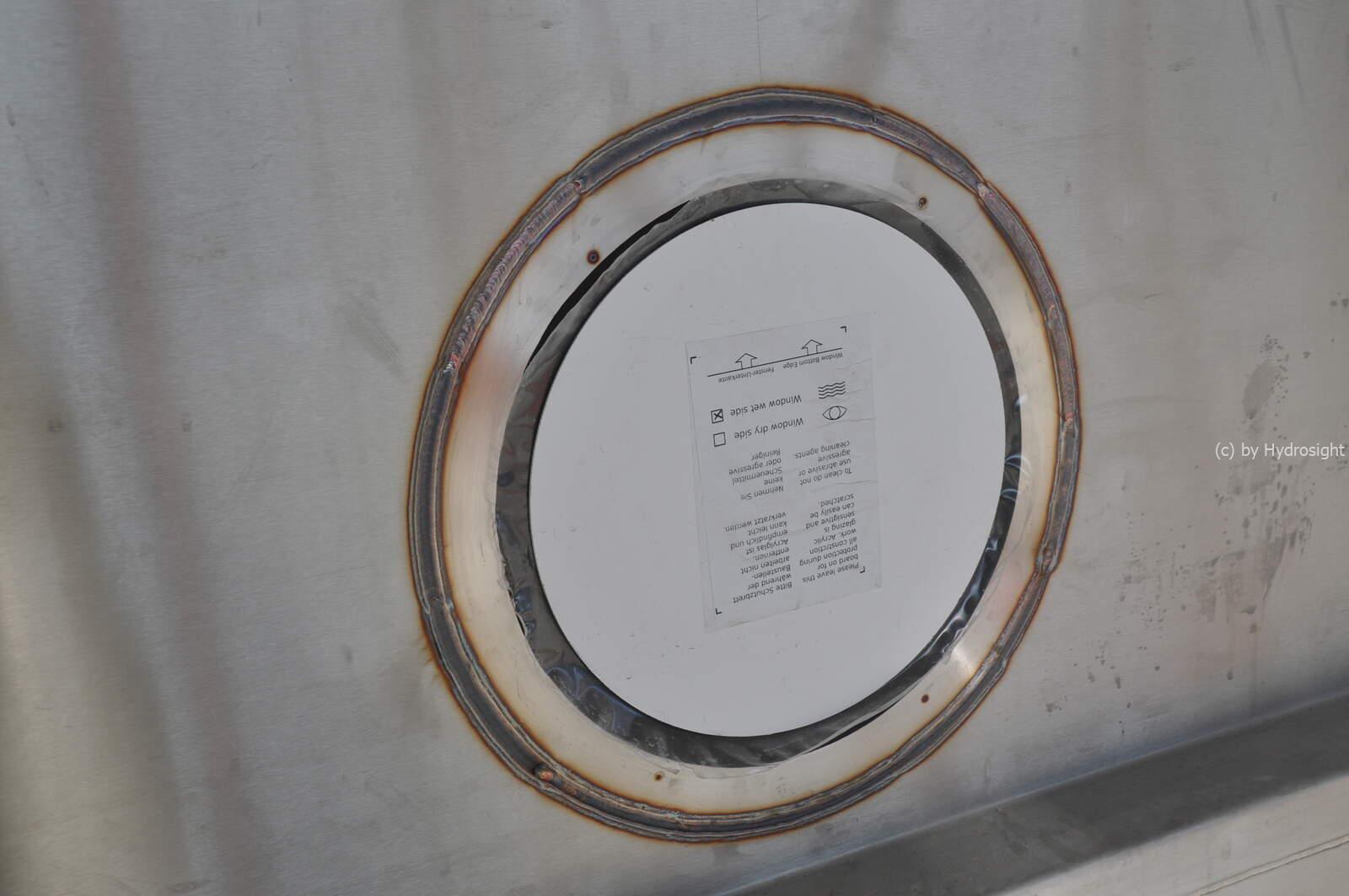
Porthole welded into a stainless steel pool in France.

Round window with stainless steel frame, ready for installation.

Window in the pond liner at the Hortus Botanicus in Amsterdam during installation. Photo: Rob Slagt
Cost and Care
Typical material cost for a round window is €2,500–3,250 for 320 mm and €5,000–6,500 for 780 mm in diameter. These figures are indicative. The price depends on size, water depth and frame, and the page The Cost of Acrylic Glass Walls for Pools and Underwater Windows explains the details.
Acrylic is cleaned with plastic cleaners, and small scratches can be polished out. The Operation and Maintenance Manual describes care and inspection. Our warranty terms apply to round windows as well.
Frequently Asked Questions
Your question is not answered here? Send it to us and we will be glad to answer it.
Ask Your QuestionWhat sizes do round underwater windows come in?
Round windows are available from 20 cm to 300 cm in diameter.
How deep can a round underwater window be installed?
The standard design is good for up to 20 m of water column. The possible depth depends on the diameter, and higher pressures are possible on request.
Is the window resistant to chlorine and salt water?
Yes. The complete system – acrylic, stainless steel frame (1.4571 / AISI 316Ti) and seals – is resistant to free chlorine up to 0.6 mg/l (standard according to DIN 19643) and to shock chlorination up to 100 mg/l for a maximum of 2.5 hours. The standard version is seawater resistant (salinity about 3.5 %). Versions for brine and for drinking water according to the KTW guideline of the German Environment Agency (UBA) and DVGW W 270 are available on request.
Can I add an underwater window to an existing pool?
Yes, in many cases, if the outside of the pool wall is accessible: the pool stands above ground, or a room such as a basement or garage is directly adjacent to the pool wall. An opening is cut into the wall and the frame is connected to the pool's waterproofing. Please send us the wall build-up so we can check it.
Is an underwater window made of glass or acrylic?
Hydrosight windows are made of cast acrylic (PMMA GS according to DIN EN ISO 7823-1). Even in thick panels it lets through about 92 % of the light, without the green tint of thick laminated glass, and it absorbs UV completely. It weighs less than half as much as glass, insulates better against condensation and deforms under overload instead of breaking suddenly. See the comparison of glass and acrylic.
How do I get a price?
Enter your dimensions in the configurator at the end of this page. You will then receive a drawing and a quote from us.